Computing Legacy
BetaProgrammable controls for self-custody. Automated inheritance without intermediaries.
Set Up in Minutes
Connect your wallet, define beneficiaries, and configure your inheritance conditions. Your plan is live on Ethereum in minutes - no lawyers, no paperwork.
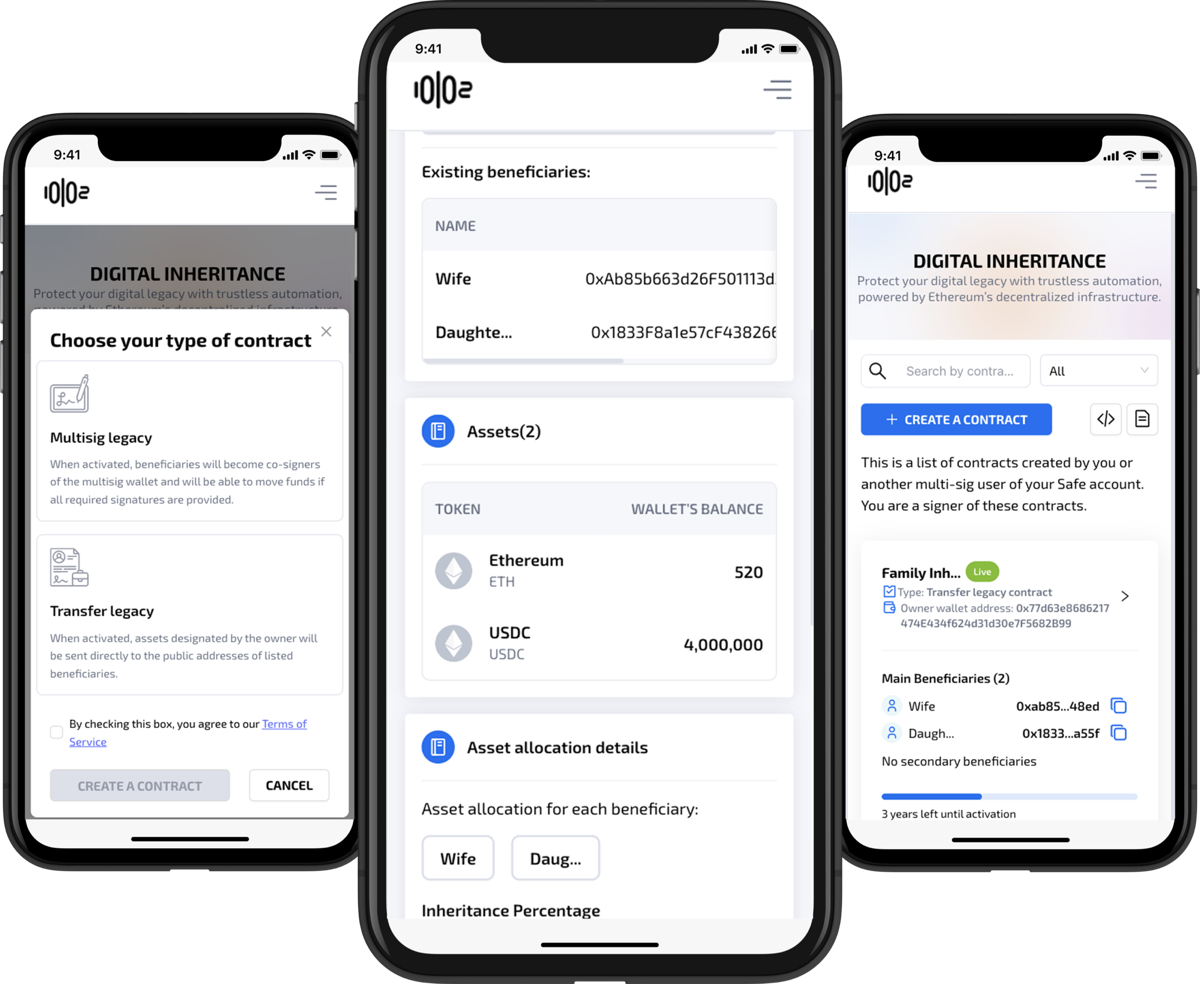
Programmable Controls for Self-Custody
The promise of crypto: you control your keys, you control your destiny.
The problem: if something happens to you, your assets vanish forever.
Computing Legacy solves this with smart contracts that automate inheritance based on your predetermined conditions - without lawyers, custodians, or intermediaries.
How It Works
Set up your inheritance plan with designated beneficiaries. Define your activity conditions. Your assets remain under your complete control while you're active.
If your predetermined conditions are met (inactivity for your specified timeframe), the smart contract automatically executes - transferring assets to your chosen beneficiaries.
No trust required. Just code running on Ethereum.
Trustless Automation
Traditional inheritance requires trusting lawyers, family members, or custodians with your private keys - defeating the entire point of self-custody.
Computing Legacy uses Ethereum smart contracts to automate the process. Nobody holds your keys. Nobody can block the inheritance. Nobody can change your plan except you.
The smart contract operates autonomously. Even if 10102 (the company) ceases to exist, your inheritance plan continues executing exactly as programmed.
Granular Beneficiary Controls
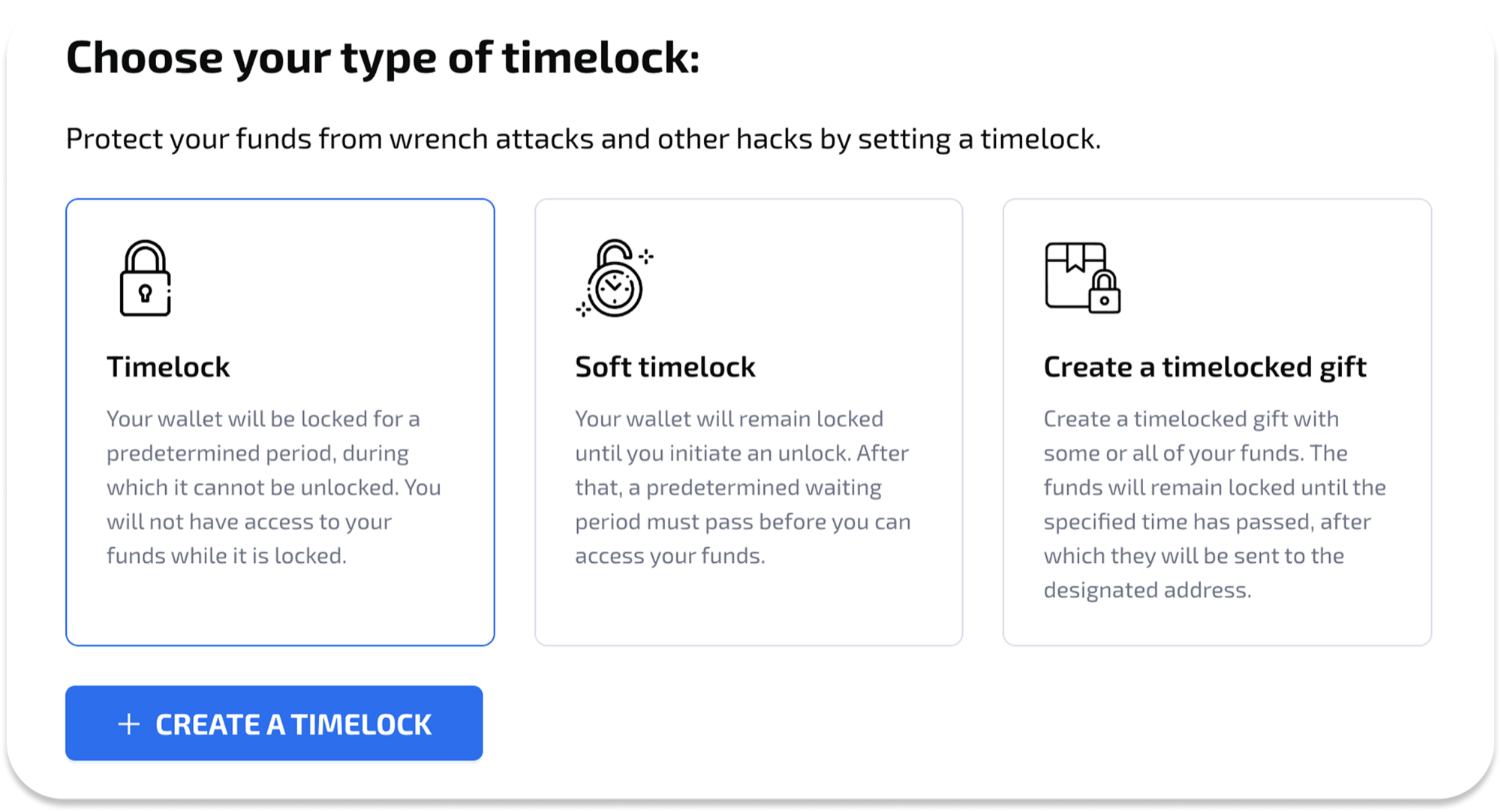
Designate unlimited beneficiaries with precise allocations:
- Specify exact percentages for each person
- Assign specific tokens or NFTs to specific beneficiaries
- Set up tiered inheritance (primary and backup beneficiaries)
- Create conditional distributions
Everything is configurable. Everything is reversible while you're active. Your inheritance plan adapts as your life changes.
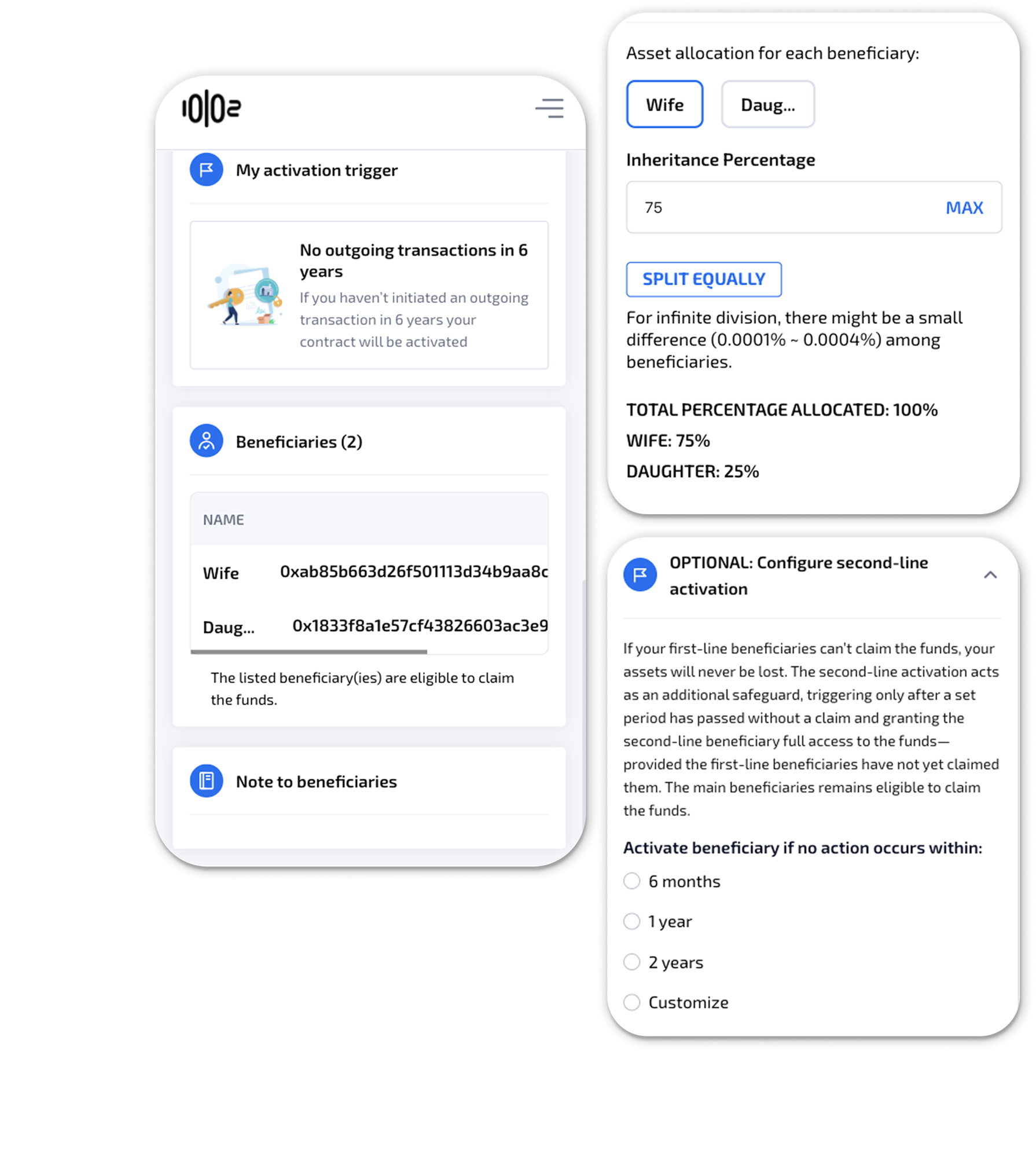
Programmable Timelocks
Add time-based protections to your assets:
- Set withdrawal delays for large transactions
- Create spending limits with time windows
- Add cooling-off periods for major moves
- Protect cold storage with time barriers
Even if your private key is compromised, timelocks give you time to detect unauthorized activity and respond from backup addresses.
Multi-Wallet Dashboard
Manage inheritance plans across multiple wallets from a single interface:
- View all connected wallets
- Monitor activity status for each wallet
- Configure different plans for different wallets
- Track time until next required check-in
Different security strategies for different holdings. Hot wallets, cold storage, hardware wallets - all manageable from one place.
Built on Ethereum
Why Ethereum:
- Proven security and decentralization
- Established infrastructure
- Long-term sustainability
- No company can shut it down
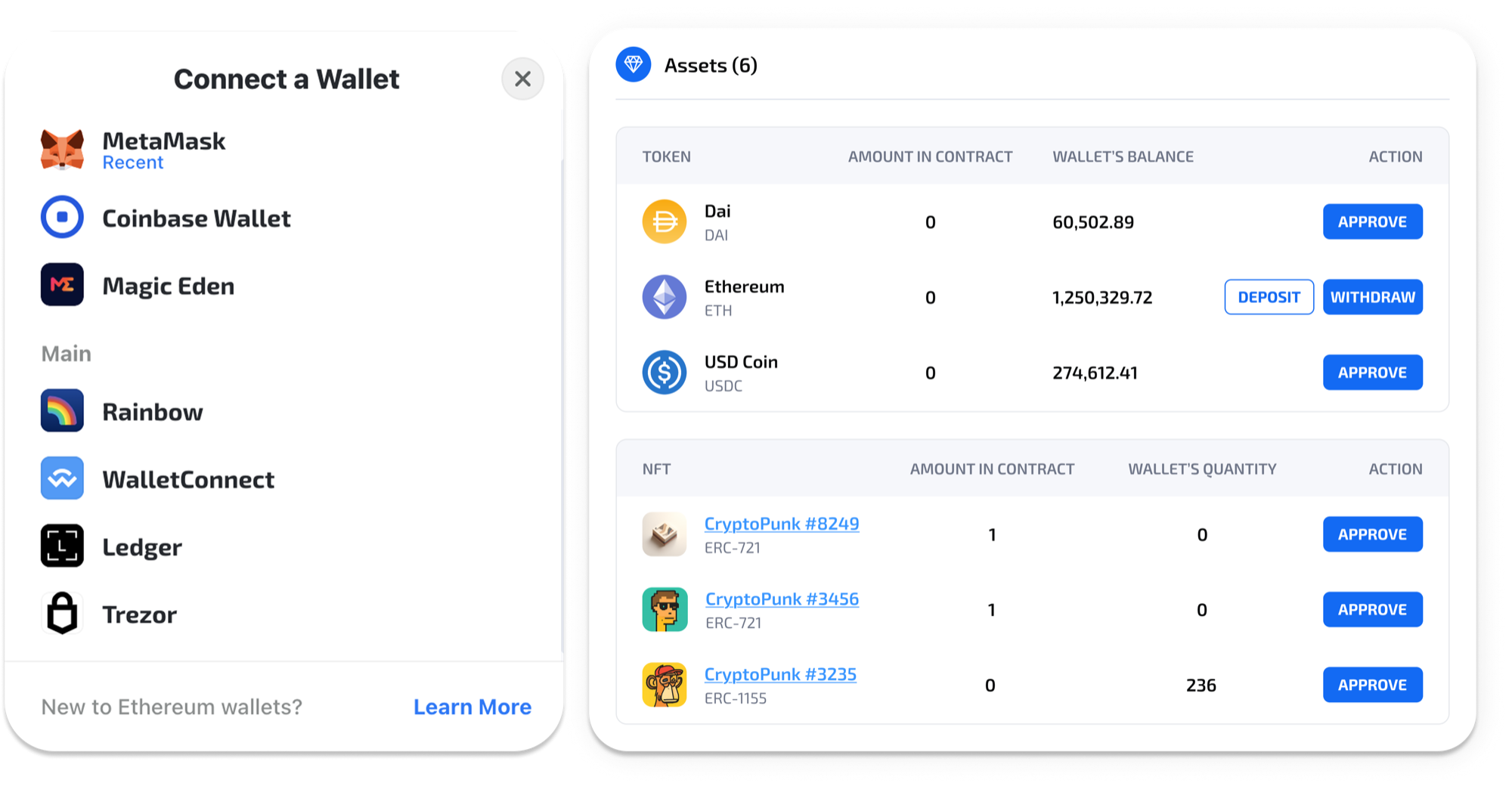
Wallet support:
- MetaMask, WalletConnect, Ledger, Trezor
- Rainbow, Magic Eden, Coinbase Wallet
- ENS (Ethereum Name Service) integration
Network options:
- Mainnet for production
- Testnet (Sepolia) for risk-free testing
Practice on testnet first. Verify everything works. Then deploy on mainnet with real assets.
Start on Testnet
Don't commit real assets until you understand the system completely.
Sepolia testnet provides:
- Free test ETH from faucets
- Full feature testing
- Risk-free experimentation
- Durations configurable in minutes (not months)
Test your complete inheritance plan. Verify beneficiary configurations. Understand the workflow. Then deploy on mainnet when confident.
Audited & Open Source
Security:
- Independently audited smart contracts
- Open source code on GitHub
- Immutable execution (runs exactly as programmed)
Autonomy:
Your smart contracts operate independently of 10102. The code runs on Ethereum forever - regardless of our company's status.
Get Started
Test on Sepolia testnet, then deploy on mainnet when ready. Fully autonomous, fully audited.
Computing Legacy by 10102 - Protection layer for self-custody
Disclaimer: Computing Legacy is provided as-is during beta. While smart contracts are audited, no system is completely risk-free. Users are responsible for understanding the system, testing thoroughly, and maintaining key security. This does not replace professional estate planning or legal advice.